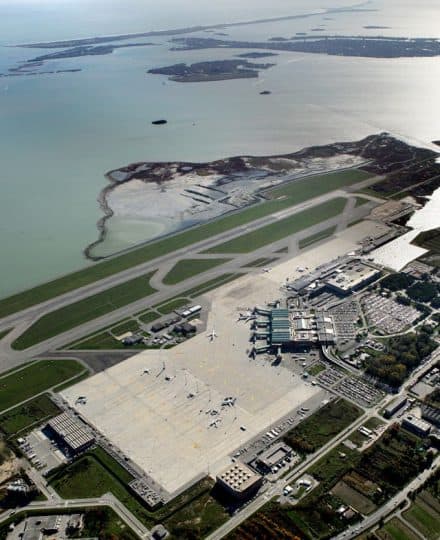
Aeroporto Fiumicino

A record-breaking dismantling

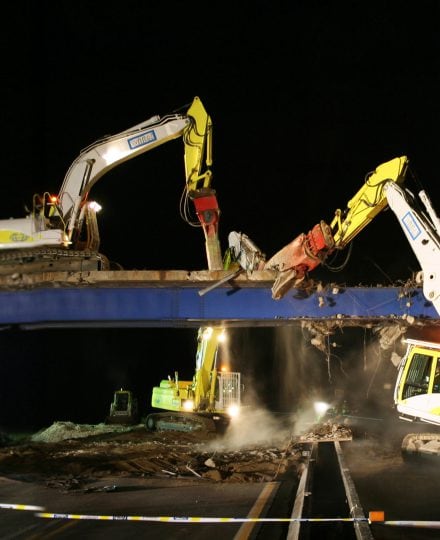
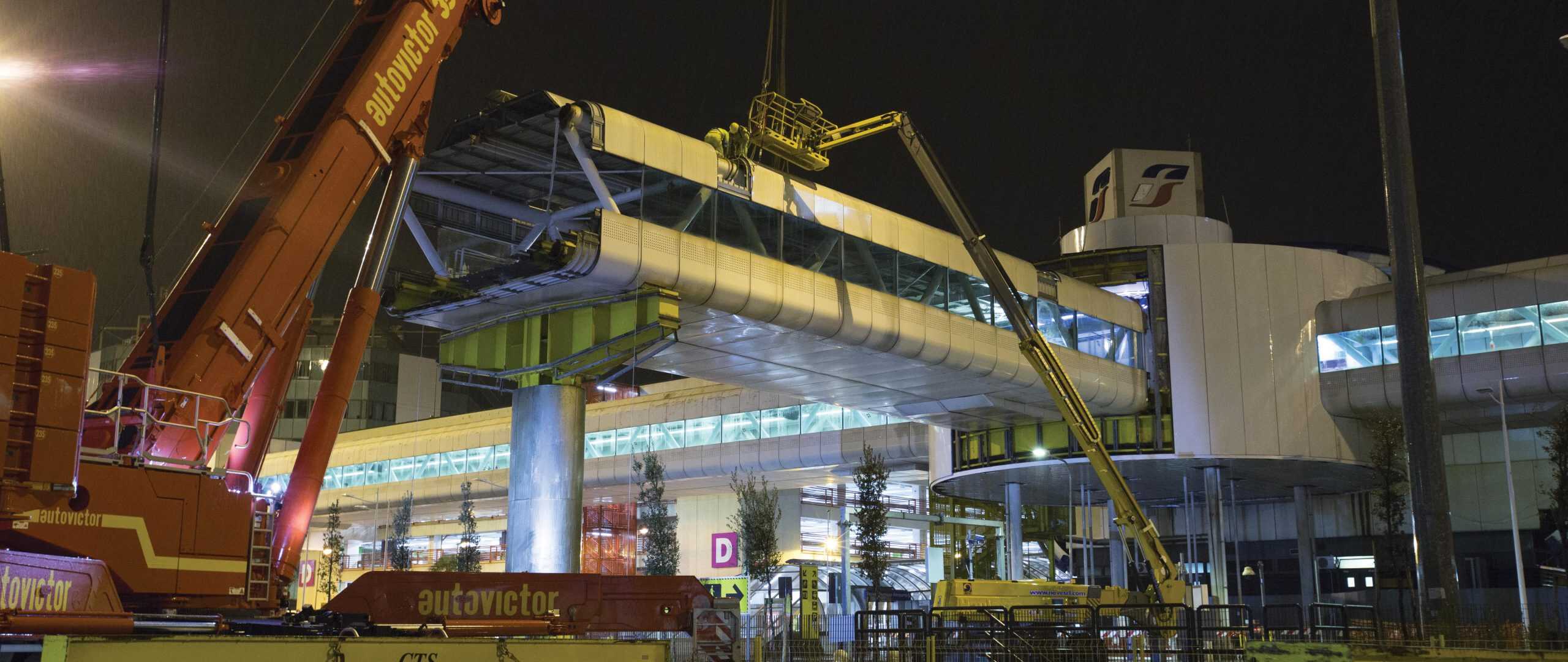
The demolition/disassembly work was carried out in just two nights and involved the removal of the suspended pedestrian walkway that connected the FS station and Terminal T3 at Fiumicino Airport.

The demolition also involved all the so-called “connective” structures (escalators, elevators and the reinforcement of the floor, etc.). The pedestrian link consisted mainly of metal structure, with a length of about 75 meters and a plan width of about 8 meters and a total weight estimated at about 400 tons. The entire pedestrian walkway was removed, in just two nights, by the use of a 750-ton crane truck on which cut sections of the walkway were loaded and disassembled. Subsequently, the removed footbridge segments were removed from the construction site area using modular trolleys.

Dismantling area 600 sqm
Dismantling weight 400 ton

Strutture per lo sport

A new function for sports facilities

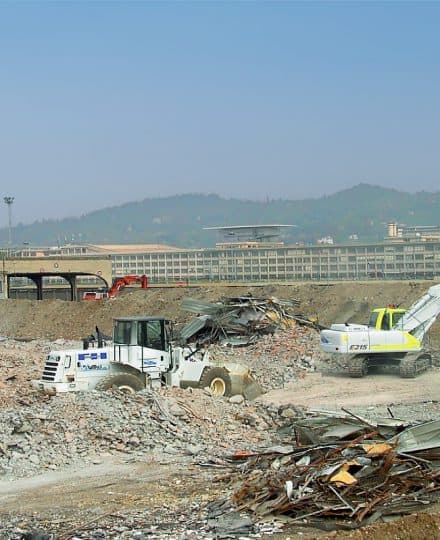
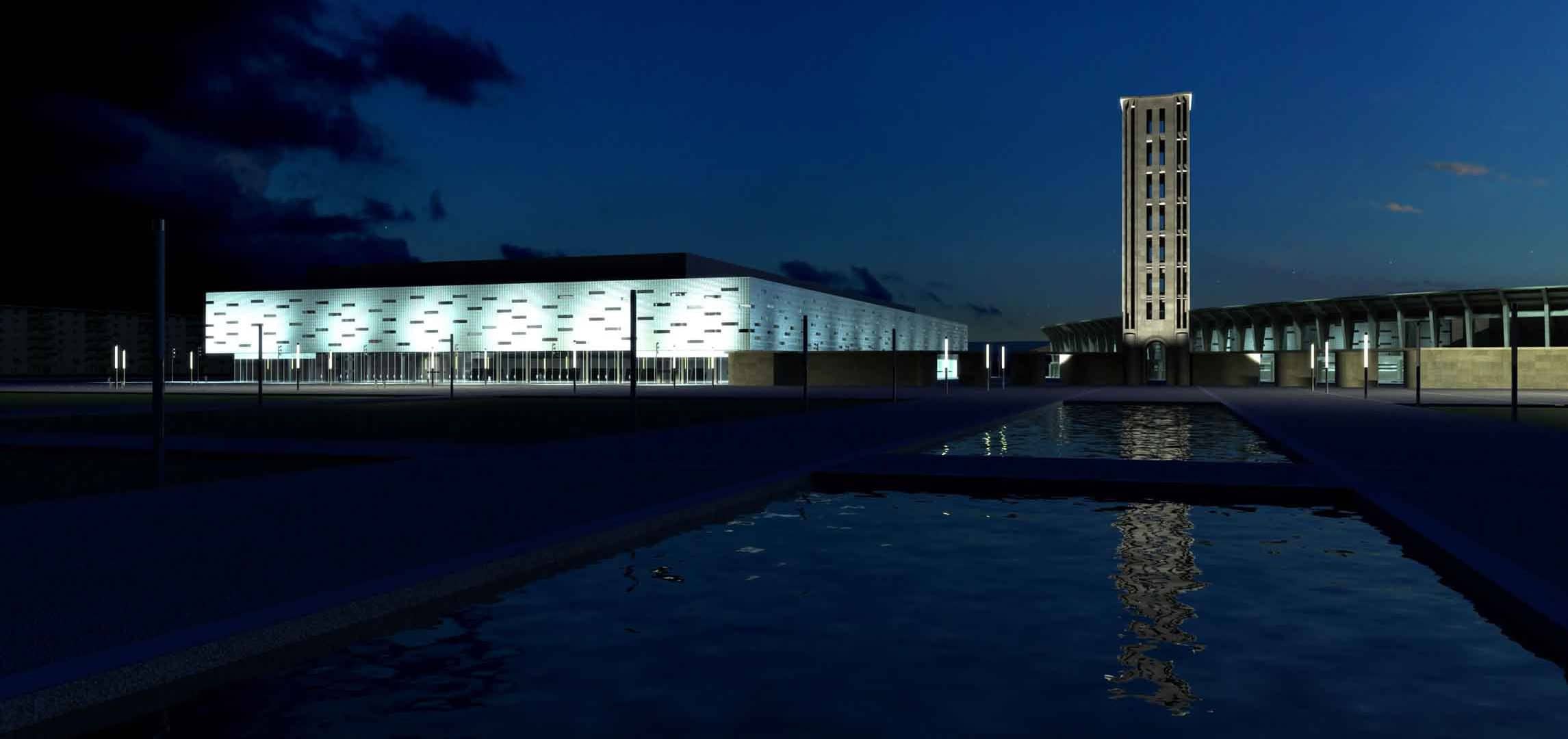
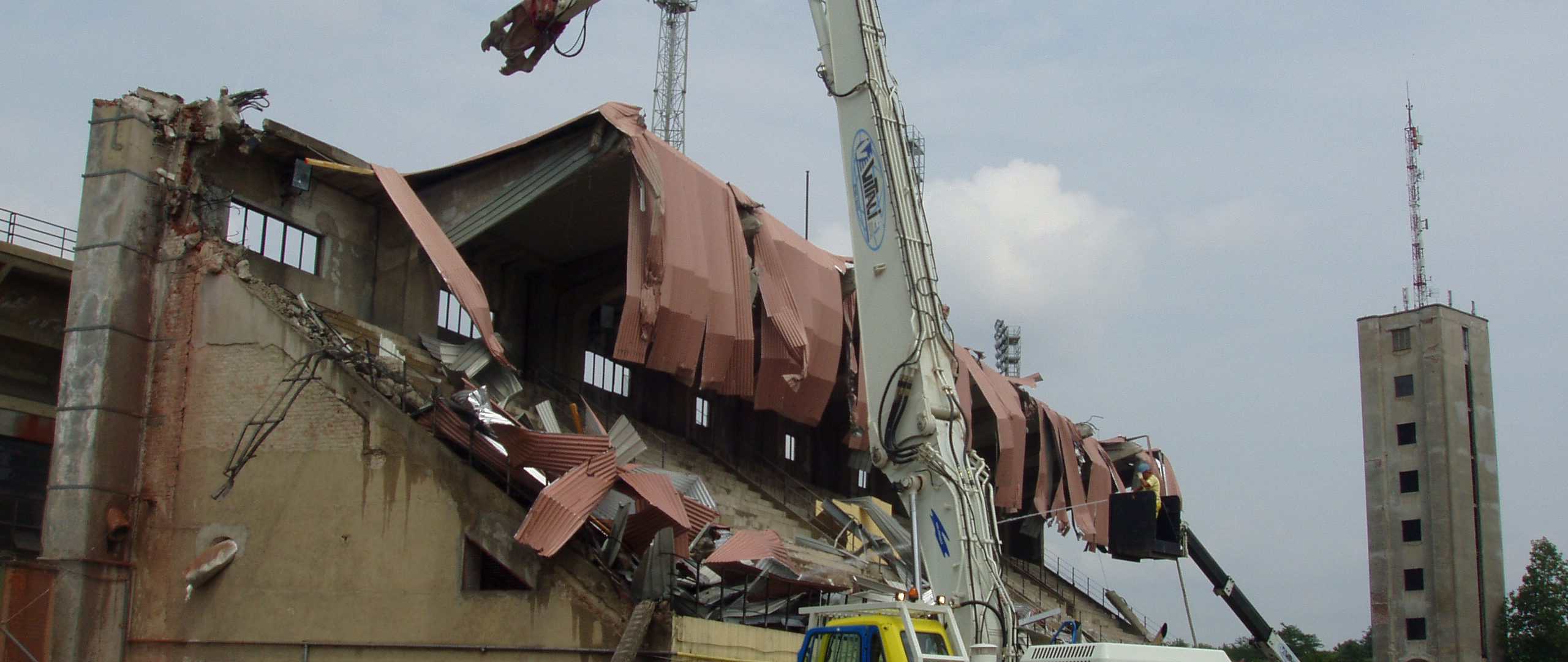
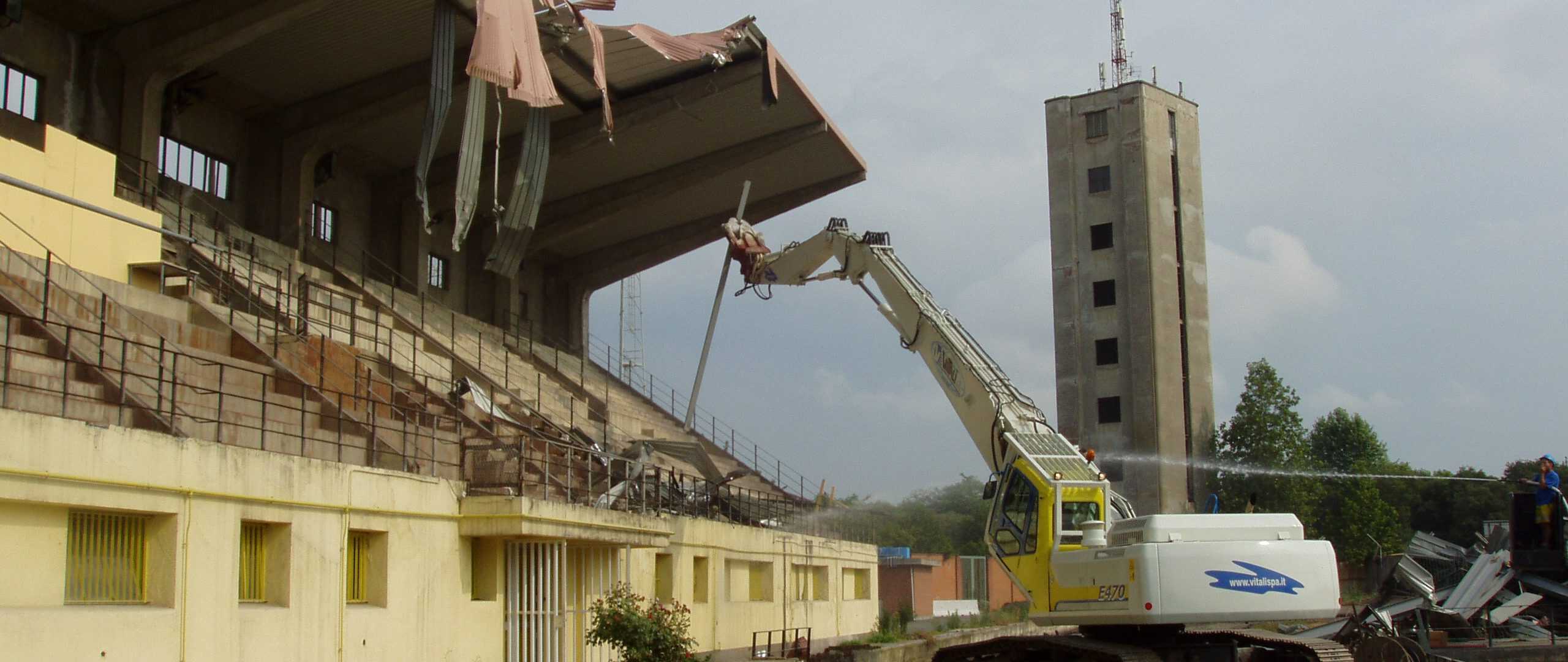
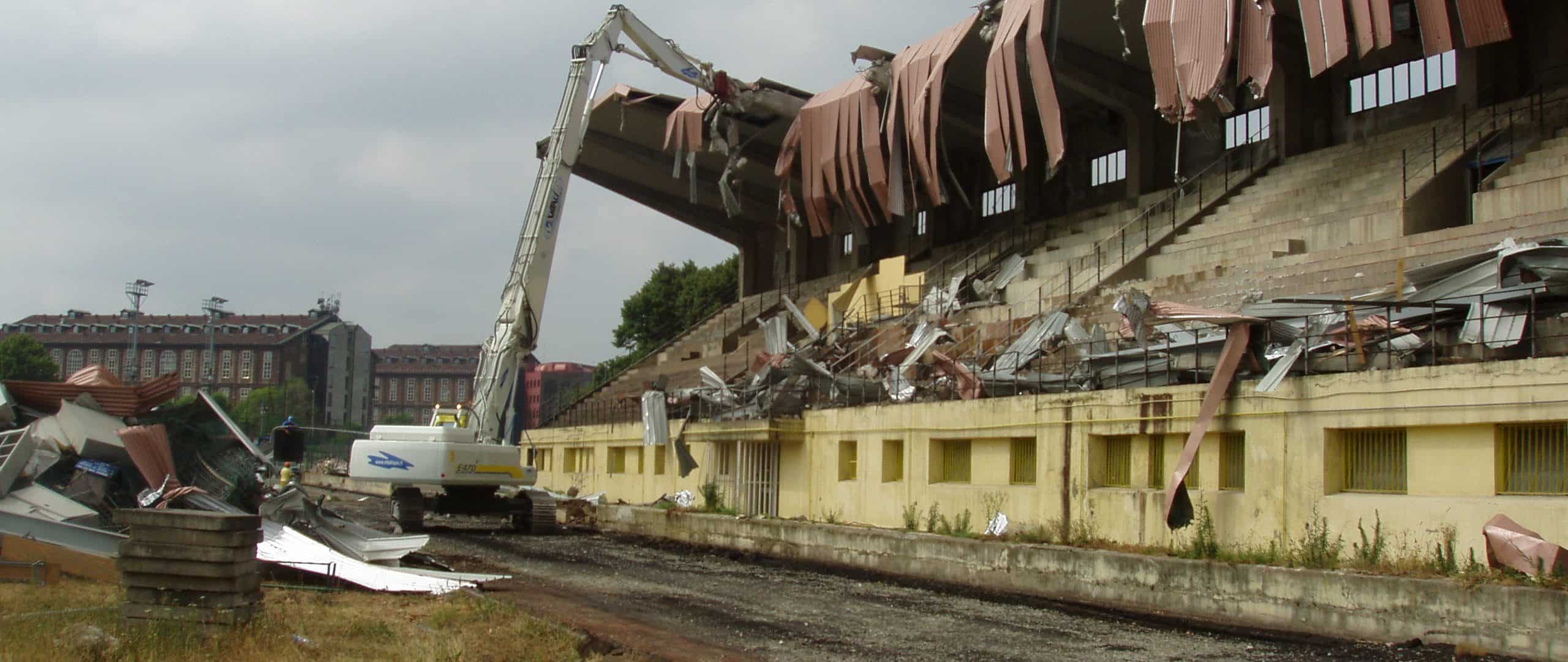
As part of the works for the XX 2006 Winter Olympic Games, we were entrusted with the demolition and excavation works at the Lingotto and Municipal Stadium sites.

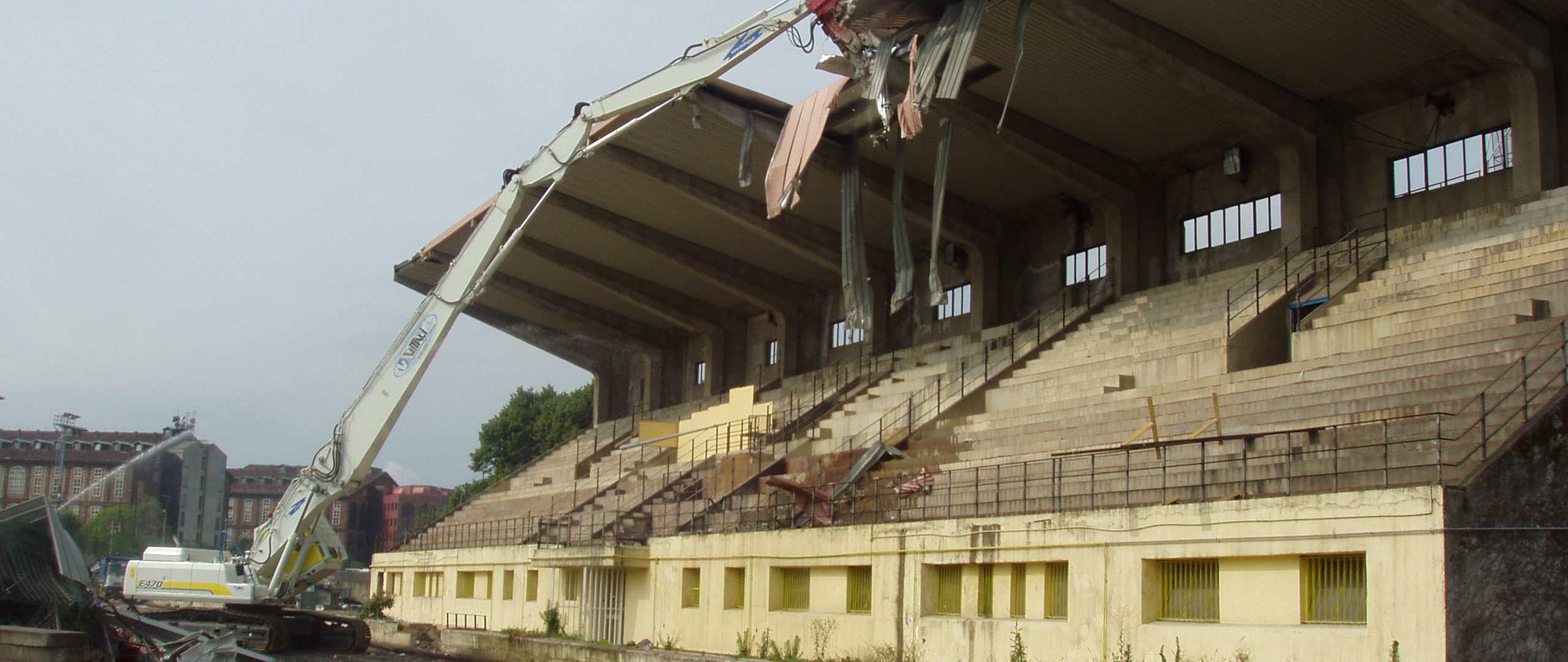
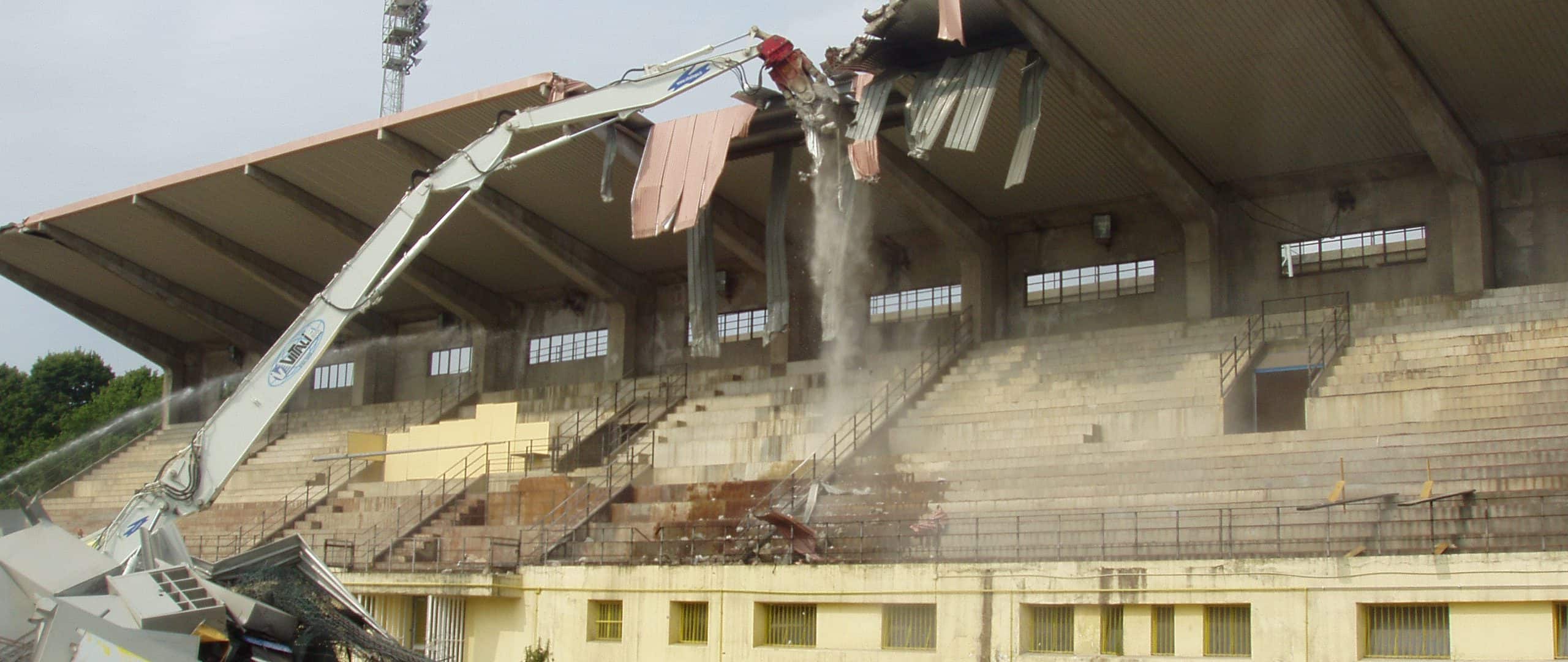
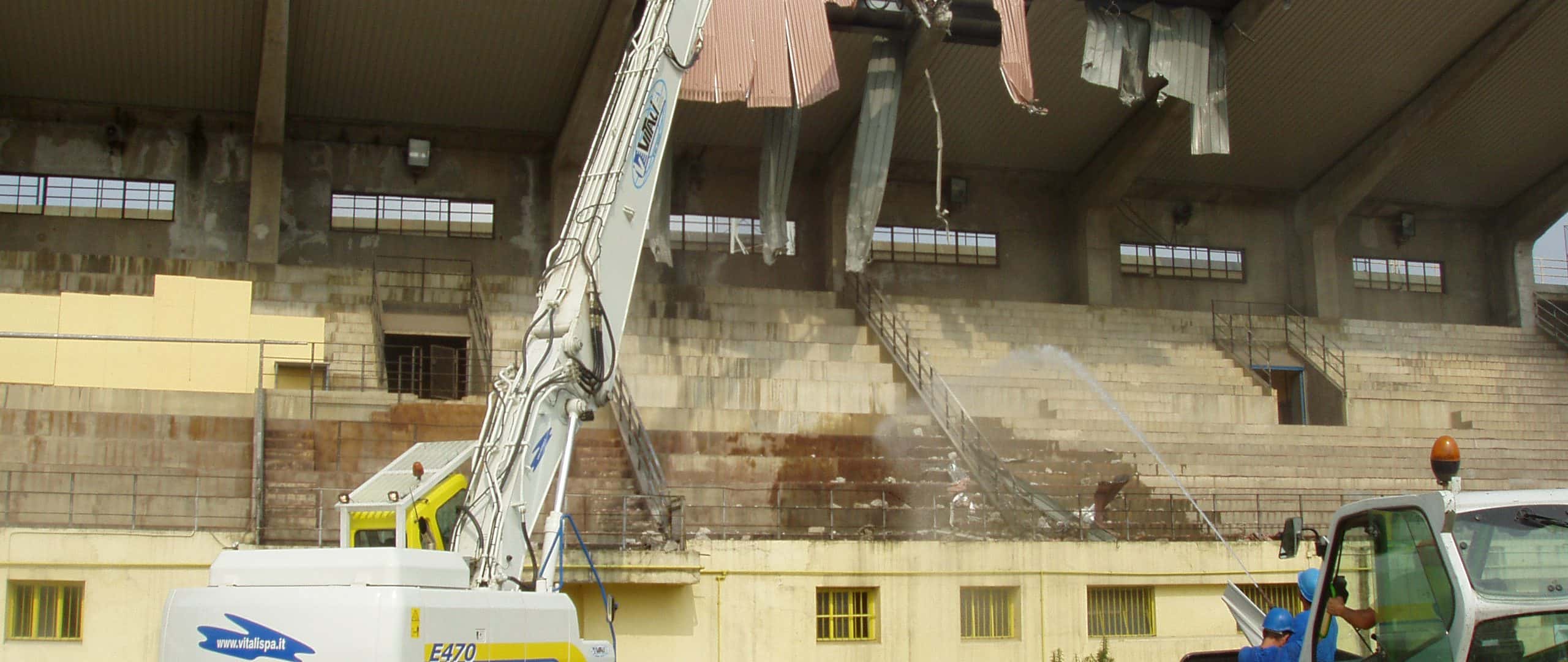
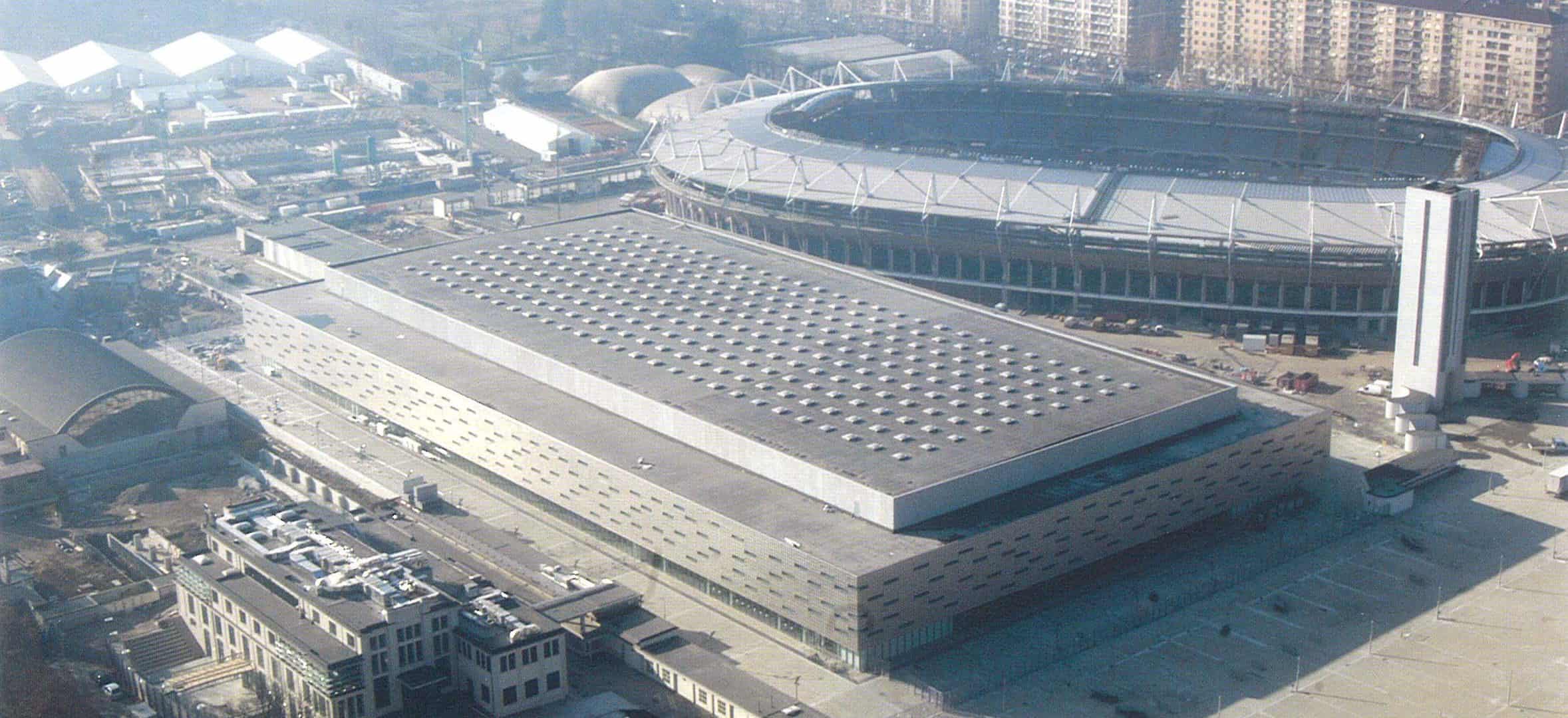
In particular, the intervention involved the demolition of the grandstand, the former athletics track, the swimming pool and the sports facilities to make way for the construction of the new Palahockey arena, venue for the Turin 2006 Winter Olympics. All works were completed two months ahead of the scheduled completion date.

The intervention was divided into three construction phases. First, the complete demolition of the entire structure, with a total volume of 20,000 cubic metres and a height of 25 metres; this was followed by the excavation of the entire area, allowing for the subsequent construction of the Palahockey.
A major effort, especially considering the tight deadlines, which involved our staff, machinery and equipment and successfully combined quality, speed and safety.

Equipment

42-tonne excavators equipped with 30-metre long-reach booms;
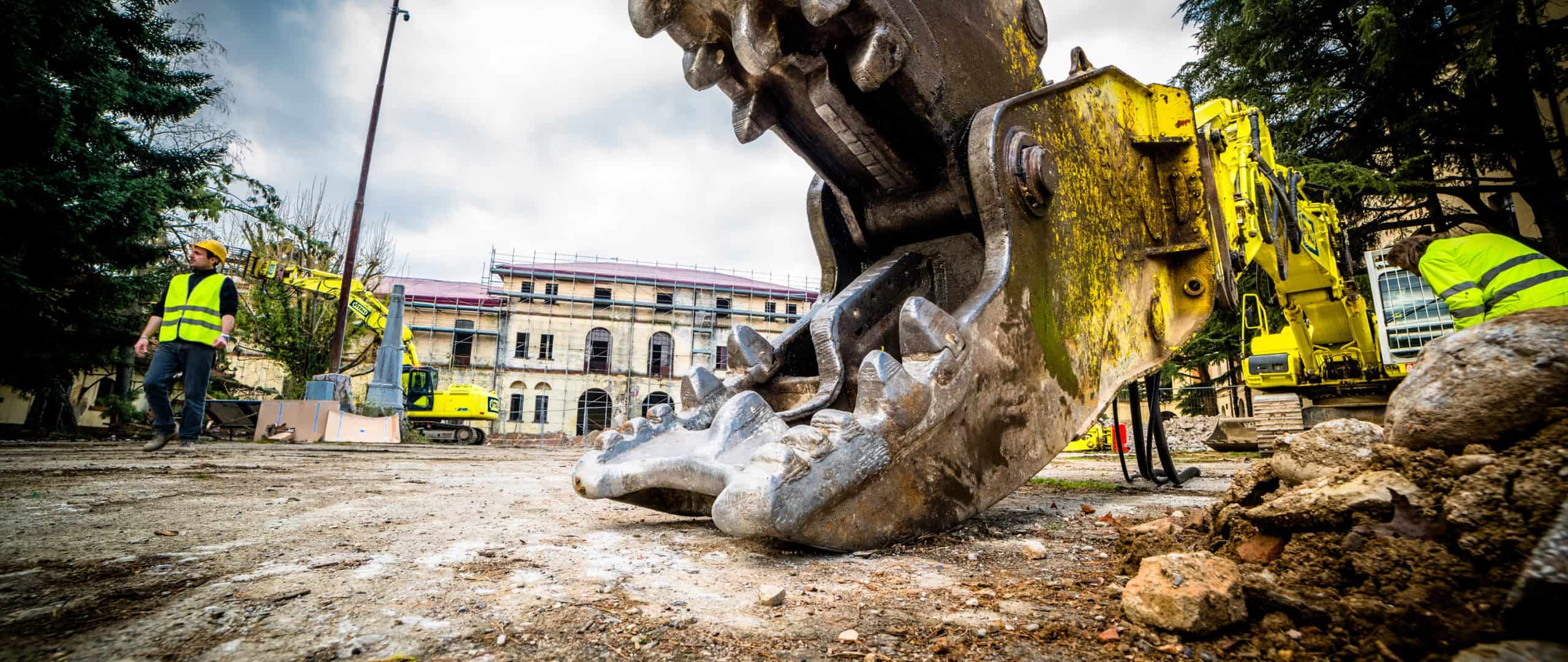
Demolition shear and crusher;
35-tonne excavators equipped with crushers;
Demolition shear and hydraulic breaker;
20-tonne excavators equipped with sorting grapples and buckets;
Mobile crushing plant.

Demolished volume 20.000 mq
Height 25 m
Duration of intervention 1 month

RCS Media Group Corriere della Sera

A symbolic intervention that paves the way for renewal

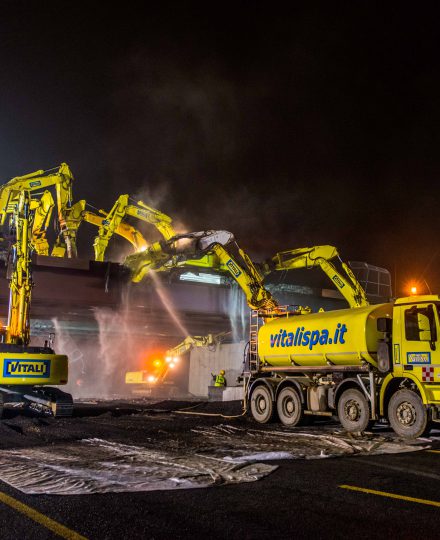
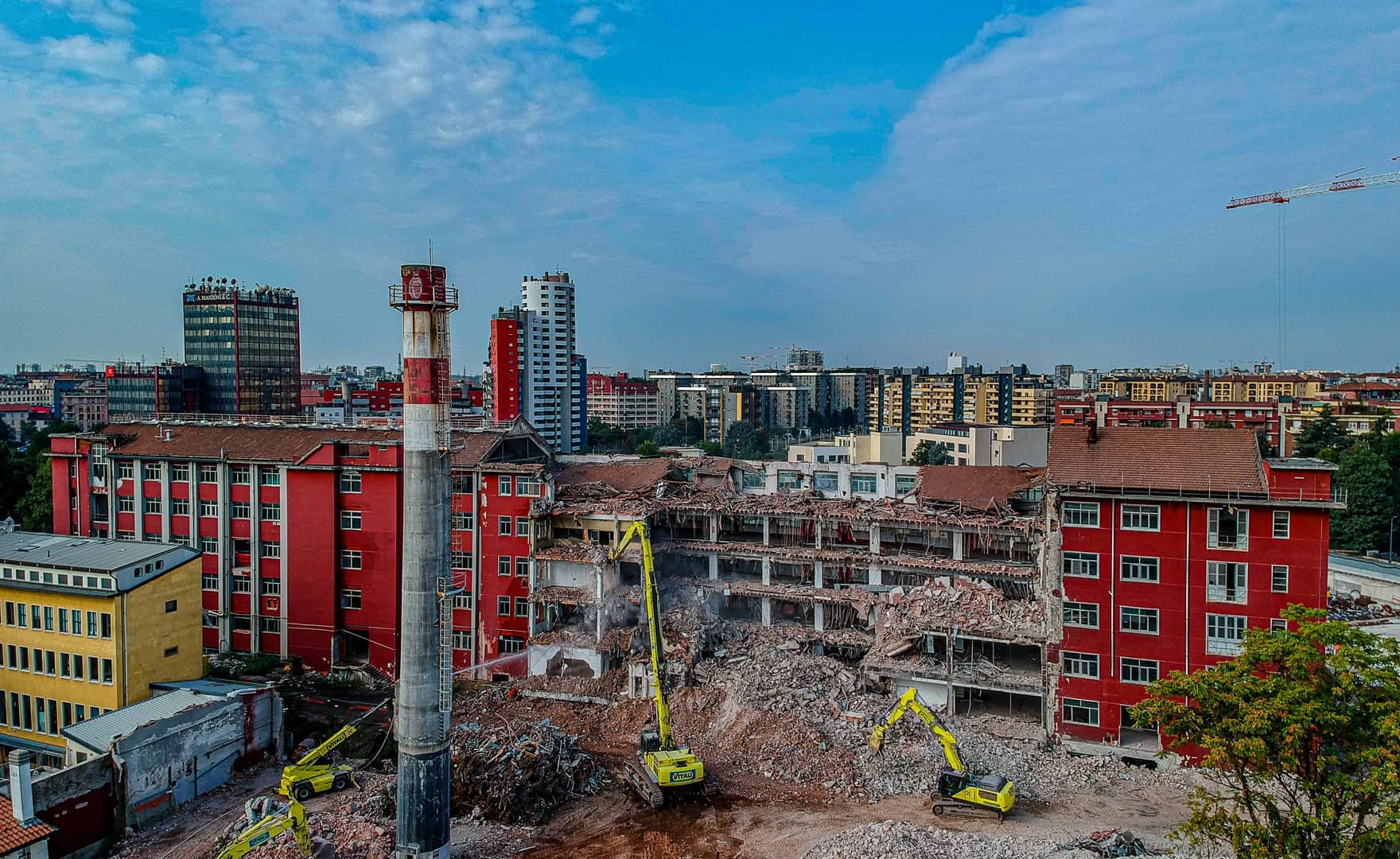
An intervention with strong symbolic significance This project involves the demolition of the RCS Media Group S.p.A. building on Via Rizzoli in Milan, as part of a broader redevelopment of the entire area. The works lasted one year and concerned a total area divided into six lots, with an overall volume of 161,500 cubic metres.

From a technical standpoint, this was not a straightforward intervention: part of the buildings had to remain fully operational throughout all demolition phases.

In particular, Lot 6 – “Martinelli Project” – housed not only offices but also the staff canteen and other corporate services. For this reason, the intervention plan was developed in several phases, allowing the relocation of ongoing activities without limiting or slowing down RCS’s normal business operations.

The particularly robust structures and the height of the buildings—exceeding 30 metres in some areas—required the use of specialised equipment suitable for complex high-level operations, including a 120-tonne excavator equipped with a 50-metre long-reach boom.

EQUIPMENT

120-tonne excavator equipped with a long-reach boom and, depending on the height of the buildings to be demolished, fitted with a hydraulic crusher;
No. 2 × 40-tonne excavators equipped with hydraulic crushers and hydraulic grapples;
Mobile crushing plant for on-site volume reduction of demolition debris;
Wheel loader;
Trucks.

SPECIAL CONDITIONS

Demolition works were carried out concurrently with the construction of new buildings on the same footprint as the demolished structures. All operations were executed without limiting or slowing down RCS’s normal business activities.

Demolished volume 161.500 mq
Height 30 m
Duration of intervention 11 months

Galleria Copreno

A strategic and safe infrastructure project

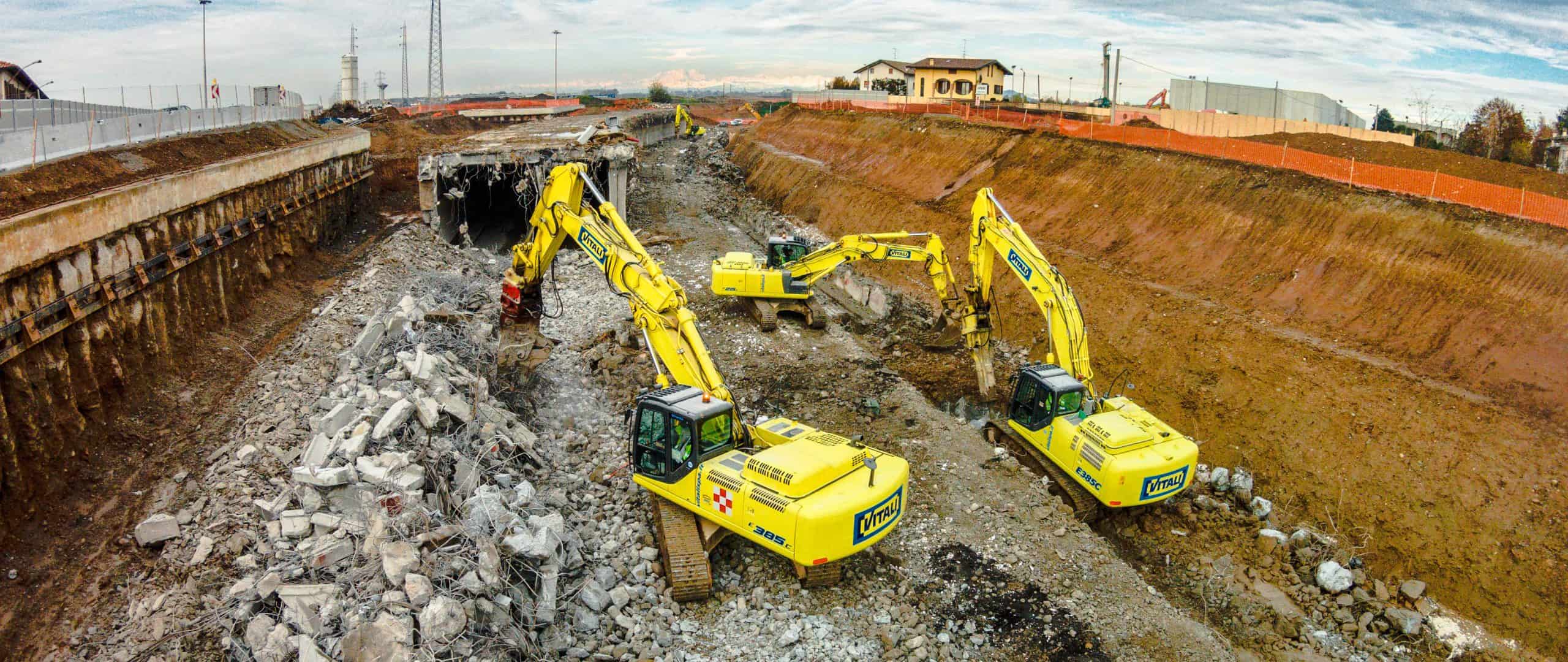
The Pedemontana Lombarda is one of the most complex highway works awaited by the territory. The protagonist is the strategic B1 section, 7.5 km from Lomazzo (CO) to Lentate sul Seveso (MB) including the junction with the SP ex SS 35 Milano-Meda, whose works are carried out by the grouping of companies headed by Strabag.

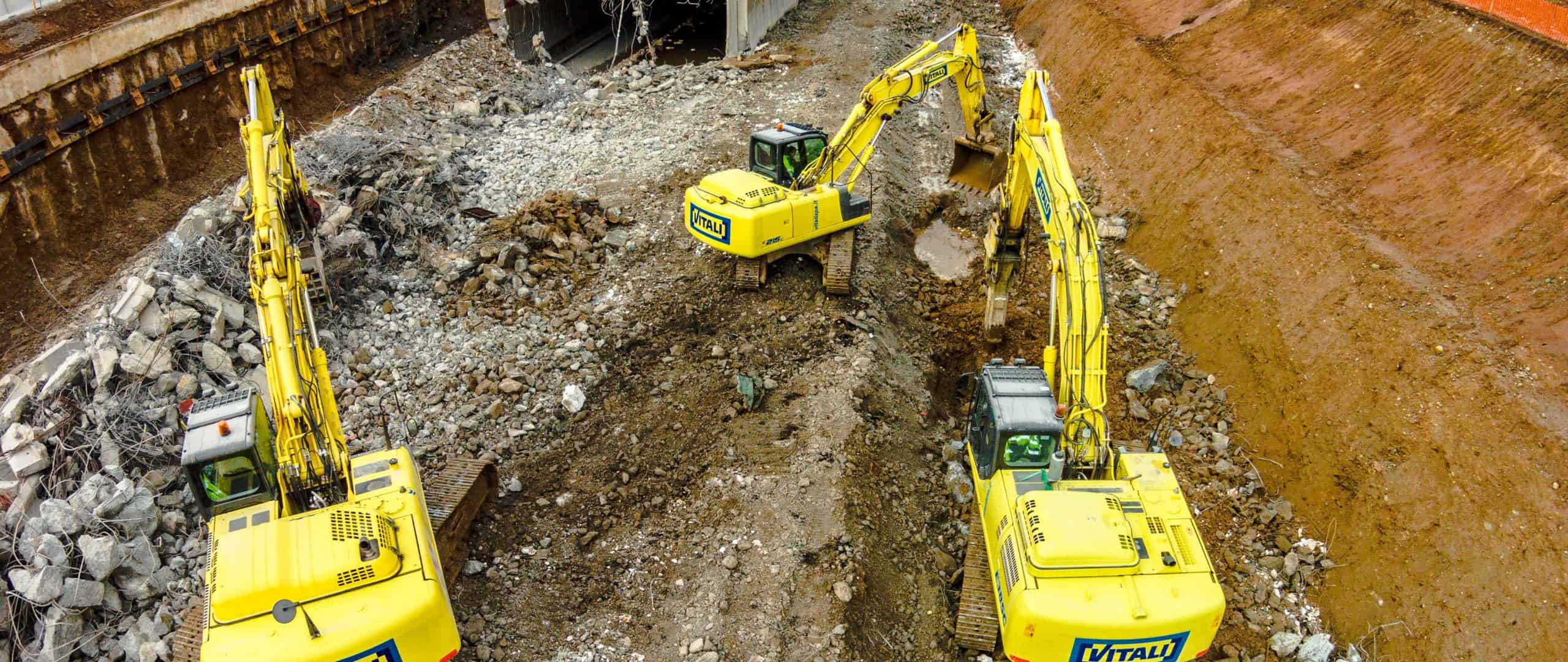
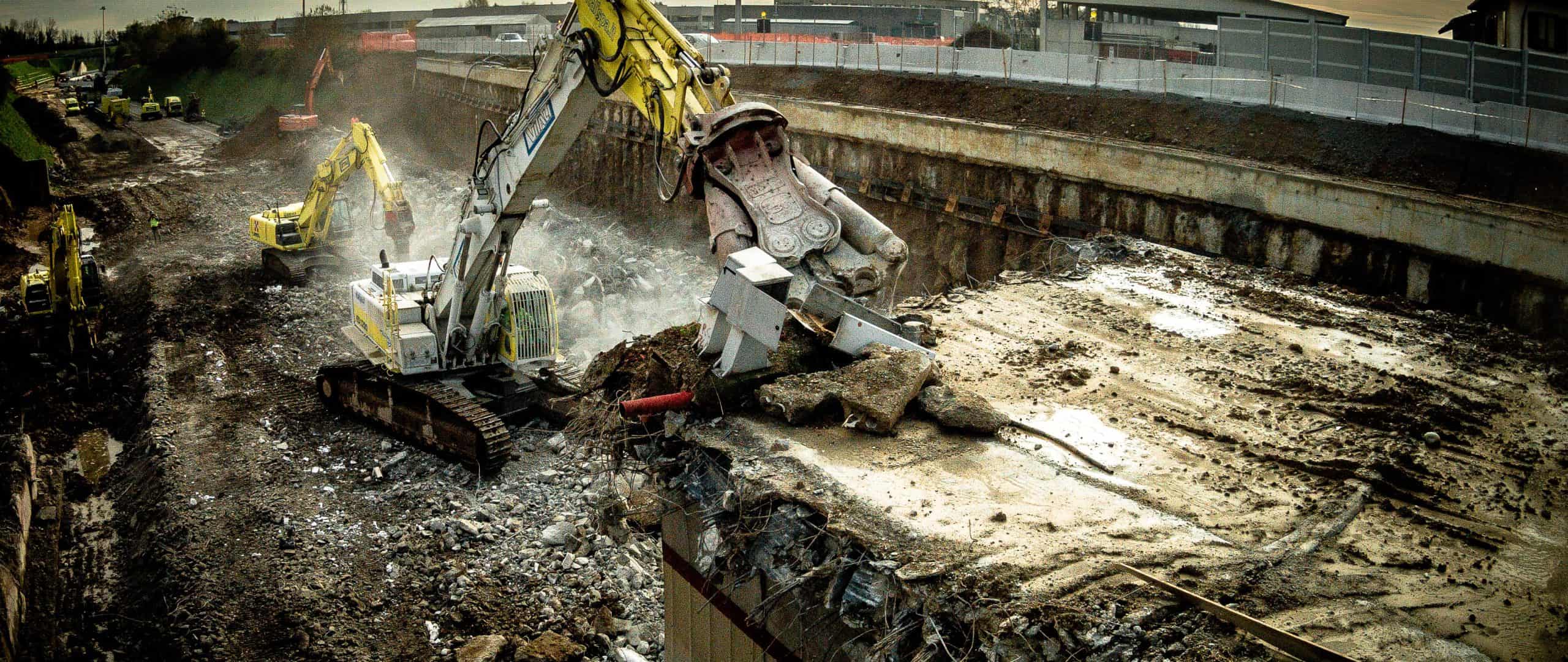
Vitali oversaw for the B1 section the demolition of the pre-existing Tonale Tunnel, which became necessary for the subsequent construction of the new Copreno Tunnel: a key factor in the intervention was the tight timeframe, which was essential for meeting the timetable for the entire work, which is also vital for Expo 2015. Demolition of the Tonale Artificial Tunnel involved two lanes in each direction. The work was completed in 16 working days, during which about 50,000 m3 of concrete was demolished: in the following days, deferrization was carried out and the waste material was loaded. Prior to demolition, containment works were also carried out, such as bulkheads to support the surrounding land where houses are located, and other activities such as de-powering of the lighting system and water lifting system of platform and removal of bodies.

Demolished volume 50.000 m³
Demolished Area 10.000 mq

Ex caserma Montelungo

An architectural heritage serving the community

Gruppo Vitali Spa took charge in March 2017 of the demolition of the Montelungo barracks in the heart of Bergamo.

The work, awarded to Gruppo Vitali by Cassa Depositi e Prestiti, is the first step in an extraordinarily large-scale redevelopment project. The demolition involves five buildings, those of lesser architectural merit that make up the complex. The construction site lasted approximately one month. For the remaining buildings that make up the complex of the former Montelungo and Colleoni barracks, conservative restoration work then began.

Demolished volume 27.000 m³
Demolished area 100.000 sqm
Buildings 5

Via Cadolini 26

Deindustrialisation and redevelopment in the city of Milan

The intervention in Via Cadolini is not only the demolition of a disused industrial building, but can be configured as an intervention of recovery and regeneration. The former Plasmon factory, which had in the fabric of Milan one of its focal points, was built in the late 1950s and represented, for decades, one of the most important production sites in northern Italy.

The area, spread over an area of just over 25,000 square meters, consists of four main buildings and will be the subject of a major and bold redevelopment. This operation, which will see the rise of new buildings purely for residential/commercial use, will bring with it multiple advantages: the recovery of an area now in disuse, without occupying new land, and the restitution of a large urban space to the city of Milan, while at the same time giving rise to a more livable and human-scale place.

Demolished area 25.000 sqm
Demolished volume above ground building 160,000 m³
Demolished volume underground buildings 20,000 m³

Zingonia Towers

An initiative against urban decay

The demolition of the Zingonia Towers entrusted to the Vitali Group by ILSPA (Infrastrutture Lombarde) saw us at work between May and June 2019.

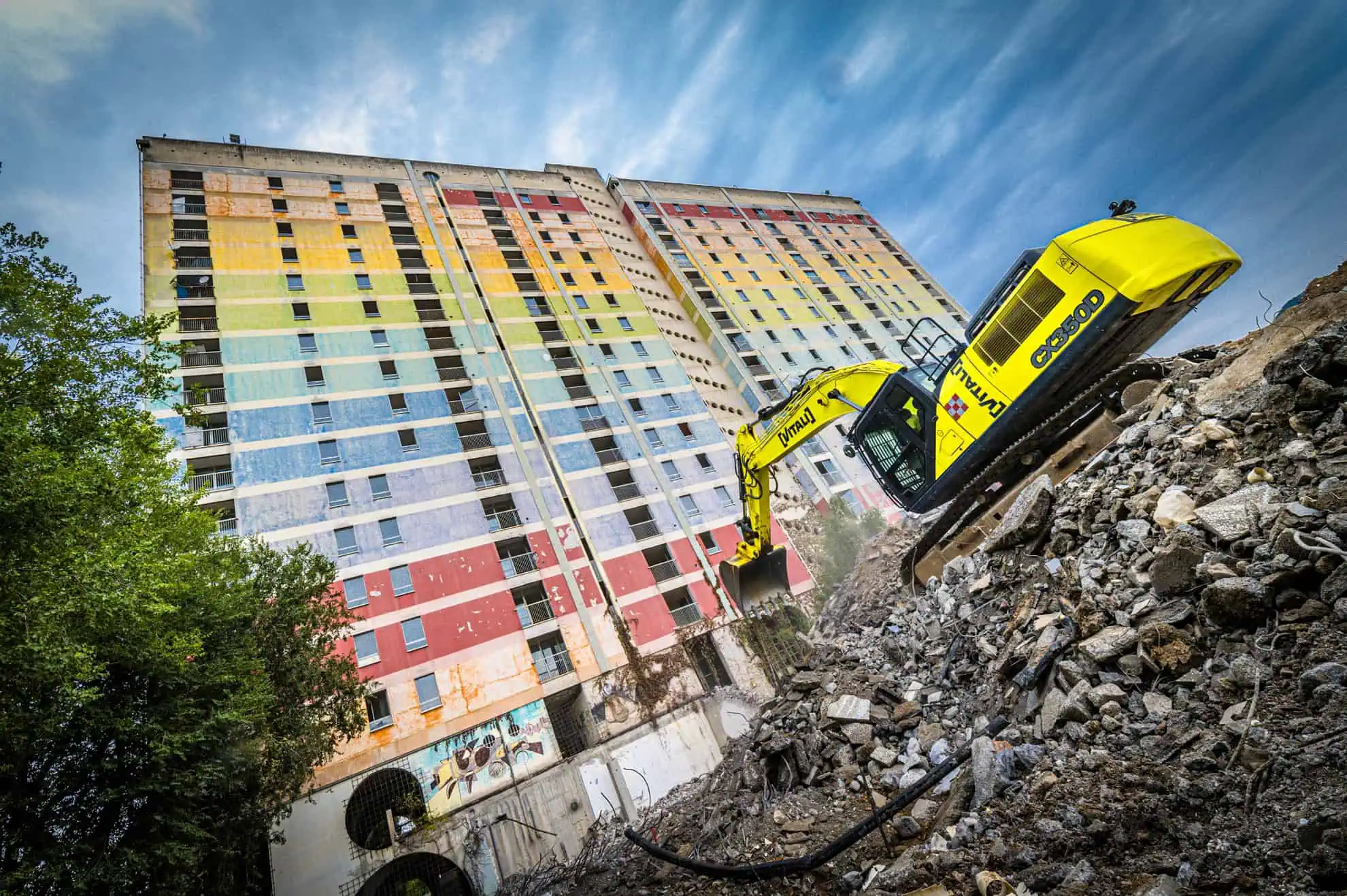
In a month and a half, the 6 buildings that had been places marked by decay and squatting for years were demolished. Only 50 days to make a clean slate of the Anna and Athena complexes. Rubble removal works are underway now, but we can still speak of a real record if we consider that the timeframe, from the announcement, was 270 days to carry out the works. The construction site covered an area of about 20,000 sq. m. A total of 6 buildings of 9 floors each for a height of about 30 mt. In total, this is about 53,700 cu m above ground and 8,300 cu m within ground.

Demolished volume 62,000 m³
Demolished area 20,000 sqm
Buildings 6

Torre Tintoretto

Torre Tintoretto: making way for a new concept of home

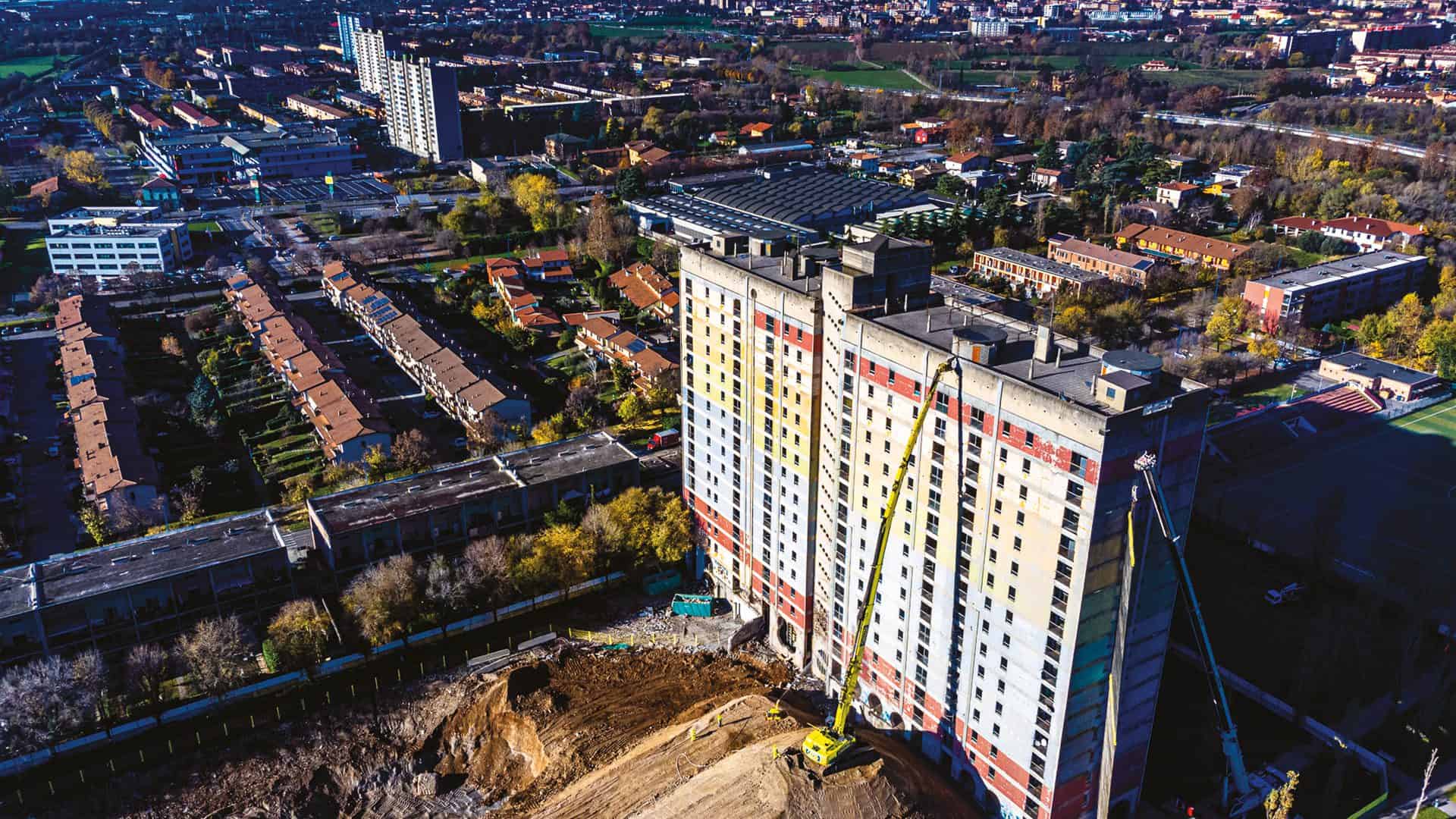
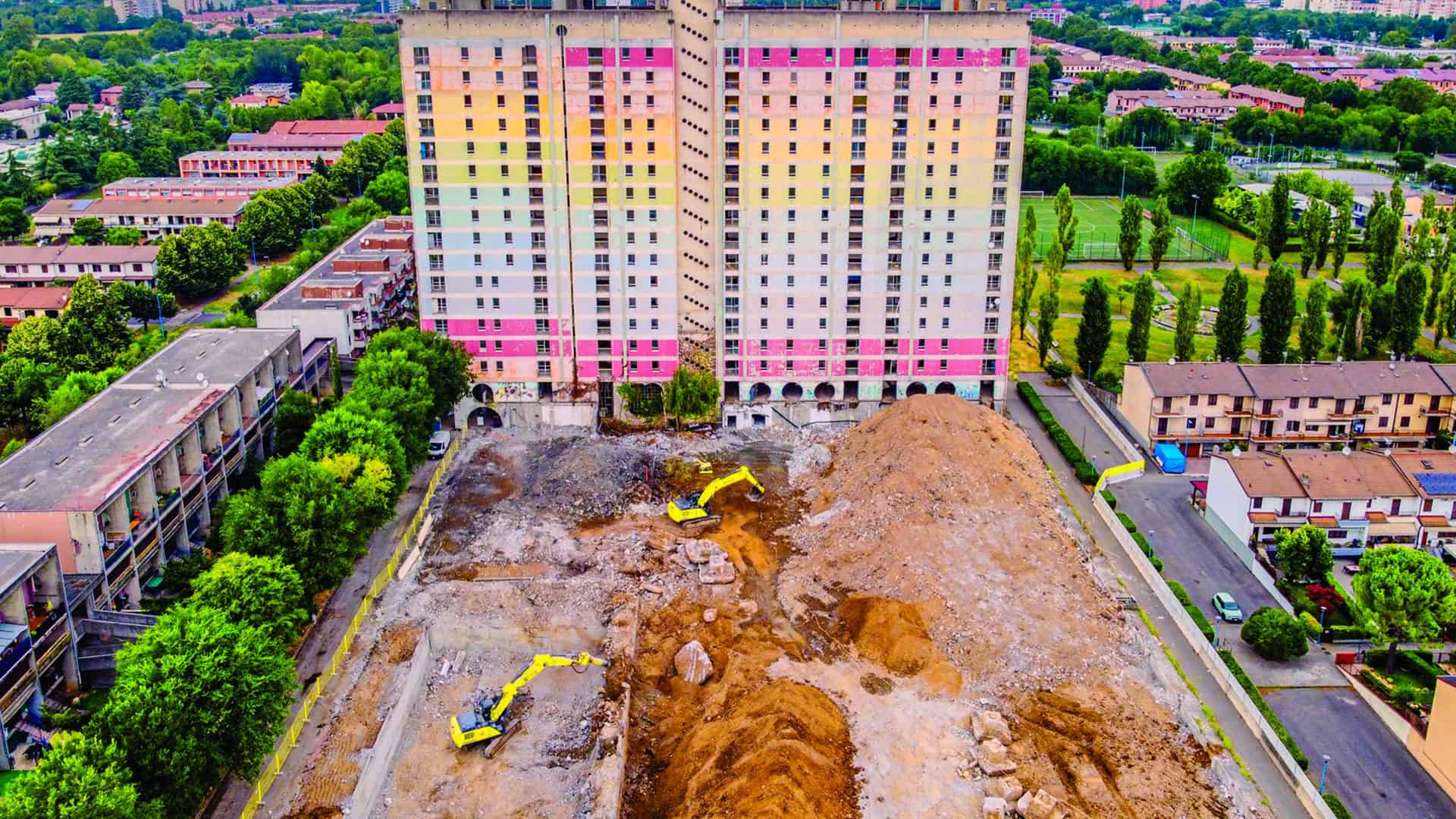
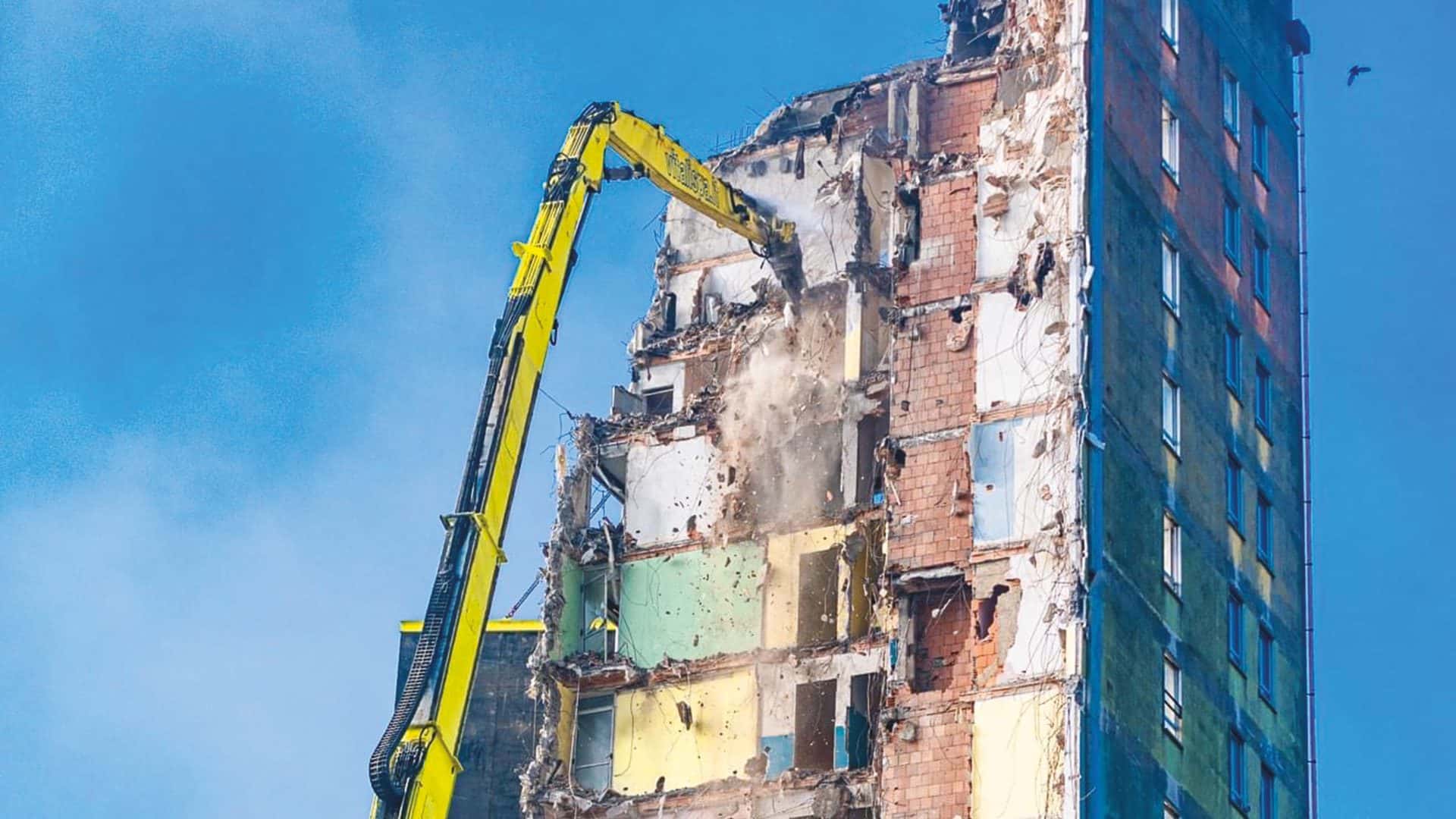
A new way of living: more inclusive, more sustainable, more collaborative. It is inspired by these values that the demolition and subsequent reconstruction of the so-called Tintoretto Tower is grafted on.

Kicking off in July 2022, the construction site has seen the gradual demolition of the building and redevelopment of the area, and marks a historic moment for the entire city. Redo Sgr’s project envisions that the 18 floors of the Tower will give way to six buildings with 270 newly designed apartments: class A, partly rented in social housing, which will become an expression of a new living culture, with common spaces available to tenants, two semi-public courtyards open to the neighborhood, stores and services, green areas, children’s playgrounds, paths and fitness areas.

Demolished volume 30,000 m³
Height 60 m
Housing units 195
Back to top